
A few years ago, finding the right travel backpack might have started with a search for “best travel backpacks.” A shopper would open several websites, compare product pages, read reviews, and try to remember which bag had the features they wanted.
Today, that same shopper might begin with a longer question: “What is a lightweight backpack for a three-day trip that fits under an airplane seat and costs less than $100?”
That is one way AI shopping is changing product discovery. Instead of starting with a short keyword and doing all the comparison themselves, consumers can describe their needs in a conversation and ask follow-up questions as they learn.
For ecommerce sellers, the change creates both opportunities and challenges. Customers may discover products through new interfaces. They may compare brands before visiting a store. They may also arrive with more specific questions about materials, delivery, returns, or product suitability.
This does not mean search engines, social media, and marketplaces are disappearing. It means the shopping journey is becoming more varied, and sellers need to understand how their products appear across it.
In this article, we’ll explore how AI product discovery works, what is changing for consumers, and what ecommerce and dropshipping sellers can do to prepare.
What Is AI Shopping?
AI shopping is the use of artificial intelligence to help consumers find, research, compare, or purchase products.
An AI shopping assistant might help a customer turn a general need into a more specific search. It can also summarize product information, compare options, and suggest follow-up questions.
For example, a shopper who wants to organize a small apartment might not know which product to search for. They could ask an AI assistant for ideas based on the available space, budget, and items they want to store.
Depending on the platform and available features, the assistant may show product details, images, merchant links, or other ways to continue shopping.
The terms used in this area are related but not identical:
- AI shopping describes the broader use of AI throughout a shopping journey.
- AI shopping assistants help consumers research and compare products.
- AI shopping agents may use connected tools to perform supported shopping tasks within the permissions given to them.
- AI product discovery focuses on how shoppers find relevant products and brands.
Not every AI shopping experience includes checkout or purchasing. Available features depend on the platform, customer location, merchant, and current product rollout.
How Consumers Traditionally Discover Products
To understand what AI shopping changes, it helps to look at how consumers have usually found products online.
A shopper may begin on Google with a product keyword, browse Amazon for ideas, or discover an item through a TikTok video. They might then visit the brand’s website, read reviews on another site, and return several days later to buy.
These channels serve different purposes:
|
Discovery channel |
How consumers commonly use it |
Example |
|
Search engines |
Search for a product, brand, or answer |
“Best travel backpack for carry-on” |
|
Social media |
Discover products through videos, creators, and recommendations |
A TikTok demonstration of a packing organizer |
|
Marketplaces |
Browse and compare products from different sellers |
Comparing prices and reviews on Amazon |
|
AI shopping assistants |
Describe a need, ask questions, and refine options |
“Help me find a compact bag for a weekend trip” |
|
Brand websites |
Explore detailed information and buy from a seller |
Checking sizing, shipping, and returns before ordering |
A customer does not necessarily choose just one path. Someone might discover a product on Instagram, ask an AI assistant to compare it with alternatives, and then visit the brand’s website.
AI-powered shopping adds another way to research products. It does not eliminate the value of existing channels.
Shopify’s analysis of its merchants indicates that AI-referred traffic has grown quickly, while traditional organic search continues to send substantially more sessions. The figures describe Shopify storefronts and tracked sources, not the entire ecommerce market.
How AI Shopping Is Changing Product Discovery
1. Shoppers Can Describe a Problem Instead of Naming a Product
Traditional product searches often begin with a product name:
“Under-bed storage boxes”
But customers do not always know what to buy. They may only know the problem:
“How can I store winter clothes in a small apartment?”
An AI shopping assistant can help the customer explore different product types, such as storage bags, boxes, or furniture with built-in storage. The shopper can then ask questions about size, material, or ease of use.
This matters because product discovery can start before the customer knows the name of the product.
For sellers, a product page should explain more than the item’s basic category. It should also answer:
- What problem does the product solve?
- Who is it designed for?
- Where and how can it be used?
- What are its important limitations?
- What information does a customer need before buying?
A storage bag page that explains its dimensions, material, closure, and intended use is more useful than one that only says “premium storage solution.”
2. Shoppers Are Using Longer, More Specific Questions
A short search such as “travel backpack” leaves many questions unanswered. The customer still needs to work through size, use, material, style, and price.
With AI shopping, the shopper can put several requirements into one request:
“Find a lightweight backpack for a three-day trip that fits under an airplane seat and has a separate laptop compartment.”
The customer can then refine the request:
“Show me options without leather that cost less than $100.”
This does not mean every shopper will use long questions or that every product will be surfaced through them. It does show why clear product details matter.
For a seller, consider the difference between these descriptions:
Vague:
A high-quality backpack for everyday use.
More useful, if accurate:
A lightweight 28-liter backpack with a padded laptop compartment, two side pockets, and a luggage sleeve.
The second description gives the customer more information to assess. It also makes the page more useful for different kinds of search and comparison.
3. Product Discovery and Comparison Can Happen Together
A conventional shopping journey often involves moving between several tabs:
- Search for a product.
- Open multiple results.
- Read product details.
- Search for reviews.
- Compare prices.
- Decide which store to visit.
AI shopping assistants can bring parts of that research into one conversation. A shopper may ask for options, compare product features, and narrow the list before clicking through to a merchant.
For example:
“Compare a stainless-steel water bottle with an insulated plastic bottle for a child’s school bag.”
The shopper could then ask:
“Which one is lighter and easier to clean?”
A useful product page should make those differences understandable. If a seller provides no weight, material, care instructions, or product dimensions, the customer has less information for a decision.
This is particularly important in categories where customers need to think about fit, compatibility, materials, or intended use.
4. Follow-Up Questions Help Shoppers Refine Their Choices
A shopper’s first question is rarely perfect. They may change their mind after seeing the options.
A customer looking for a pet grooming brush might begin with:
“What brush is suitable for a long-haired dog?”
Then ask:
“Which style is easier to clean?”
And finally:
“I need something gentle and easy to hold.”
AI-powered shopping can support this process by allowing the shopper to refine the request.
For sellers, this is an opportunity to examine the questions customers already ask through support tickets, product reviews, and social media comments.
If customers repeatedly ask whether a brush is suitable for a particular coat type, that question may belong on the product page. The answer should be based on verified product information, not an assumption.
5. Consumers May Discover New Brands During Research
Many shoppers begin with a familiar brand. Others care more about finding a product that meets a specific need.
AI shopping experiences can introduce shoppers to products and merchants they did not know previously. A smaller store may have a useful product for a particular audience, but the buyer still needs enough information to trust the offer.
For a smaller ecommerce brand, useful information includes:
- A clear product title.
- Accurate product photos.
- Materials, dimensions, and product specifications.
- Current price and availability.
- Shipping and return information.
- Contact details.
- Relevant product reviews, where available.
Providing this information does not guarantee that an AI platform will recommend the product. It does help shoppers understand what is being sold when they encounter the store.
6. The Next Step After Discovery Depends on the Platform
Some AI shopping experiences help customers compare products and then direct them to a merchant’s website. Others may provide different purchase or checkout options for eligible merchants and users.
The exact experience can depend on:
- The platform.
- The shopper’s location.
- The merchant.
- The product category.
- Current feature availability.
- Whether a particular integration is supported.
For sellers, the practical point is to understand the customer journey on each channel they use. Product discovery, checkout, payment, customer support, and fulfillment may involve different systems.
AI Shopping in Practice: ChatGPT, Google, and Shopify
AI product discovery is developing across several platforms. They do not all serve the same role, so sellers should understand how each fits into the shopping journey.
ChatGPT Shopping
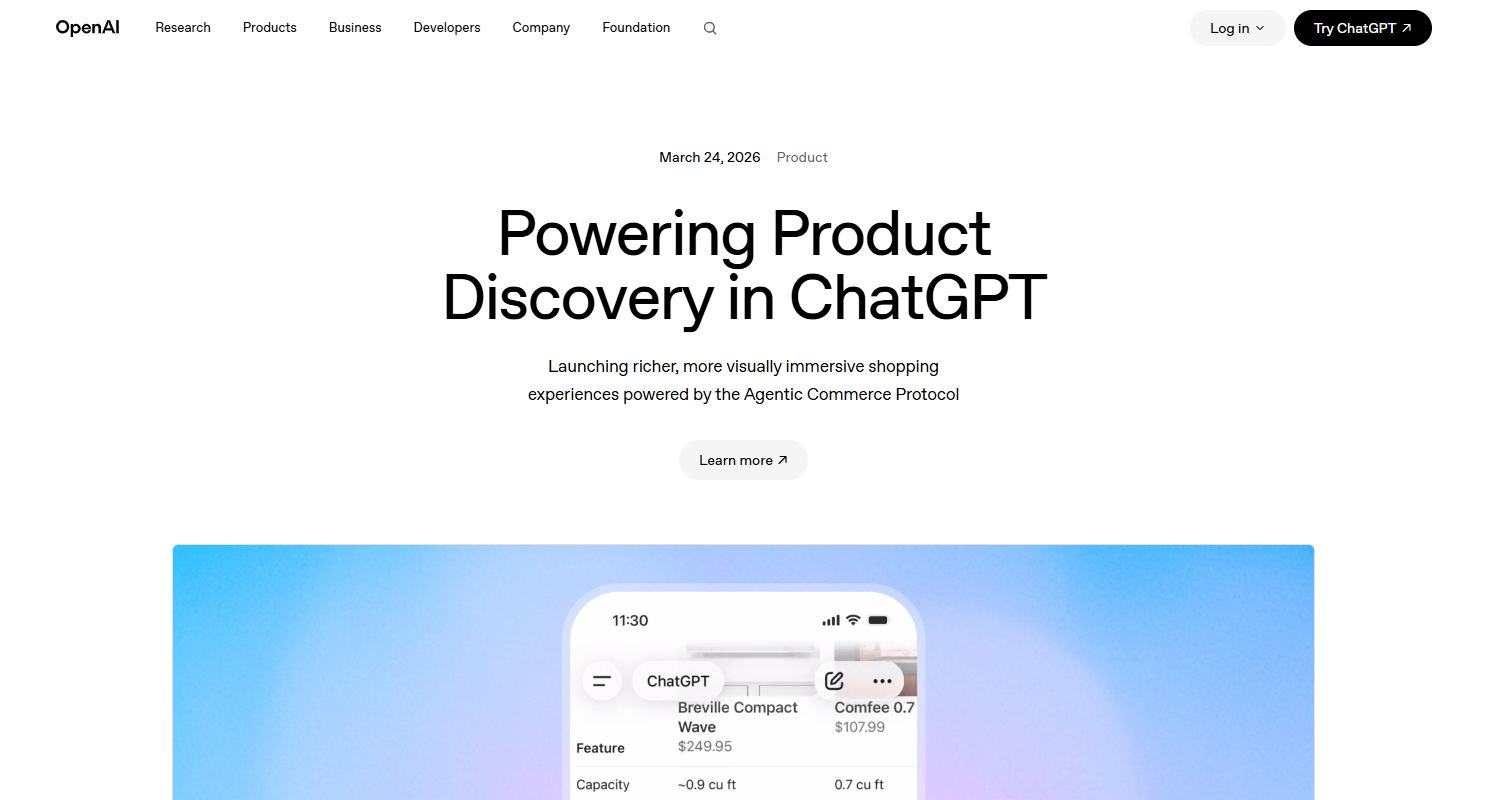
ChatGPT can help users explore products through a conversation. A shopper can describe a need, ask for comparisons, and refine the results with follow-up questions.
Depending on the experience, ChatGPT may show product information and ways to learn more or purchase. OpenAI explains that product information can come from sources such as the public web, third-party providers, and merchant-provided data.
OpenAI has published more information about product discovery in ChatGPT and merchant product feeds.
For sellers, the starting point is to understand the current participation requirements and keep product information accurate. Providing a feed or making product data available does not guarantee placement or recommendation.
Google AI Shopping
Google combines AI capabilities with product information to help shoppers explore products and narrow their choices.
A shopper might begin with a general question, see product options, and then continue exploring based on attributes such as style, price, or intended use.
Google has described how its AI Mode shopping experience uses product information to support visual exploration and help shoppers compare options.
For merchants, this makes it important to review the accuracy of product information provided through relevant Google tools and on the store itself.
Shopify and AI Commerce Channels
Shopify is a merchant platform rather than a single consumer shopping assistant. It can help eligible merchants connect product information to supported shopping channels.
OpenAI has said that product data for Shopify merchants is integrated into ChatGPT through Shopify Catalog. The exact shopping experience and merchant eligibility should be checked against current platform documentation.
A seller should still review their own product pages, stock, pricing, shipping, and fulfillment process. Connecting a catalog is only one part of creating a dependable customer experience.
What the Data Says About AI Product Discovery
AI shopping is attracting attention, but sellers need to understand what the available numbers actually measure.
According to Shopify’s analysis of Q1 2026 commerce data, referral sessions from AI chatbots to Shopify storefronts grew more than eight times year over year.
That figure is useful because it shows growth in an emerging channel. It has limits:
- It concerns traffic to Shopify storefronts.
- It measures tracked referrals from AI chatbots.
- It does not mean AI traffic is larger than traditional search traffic.
- Growth from a smaller starting point can produce a large percentage or multiple.
- It does not show how every ecommerce store performs.
Shopify also reported that AI-referred sessions grew while organic search continued to drive substantially more traffic to its merchants in the period it analyzed.
Another point comes from Shopify’s 2026 holiday research: 65% of surveyed shoppers said they planned to use AI for at least one shopping task during the season. That is a statement of surveyed intention, not proof that the same percentage ultimately used AI to shop.
For sellers, the sensible response is not to abandon existing channels. It is to begin measuring AI-related traffic where possible, improve the clarity of product information, and learn how customers arrive at the store.
What AI Shopping Means for Ecommerce Sellers
Your Product Information Has More Jobs to Do
A product page has always needed to help customers make a decision. In AI-powered shopping, the same information may also be used across more discovery and comparison experiences.
Start with the information a customer would expect to find:
- What the product is.
- Who it is for.
- Dimensions and materials.
- Available colors and sizes.
- What is included.
- Important usage instructions.
- Price and availability.
- Shipping and return information.
Consider a pet water fountain. “Modern and convenient” is not enough for many buyers. They may want to know:
- How much water it holds.
- Whether it requires a power connection.
- What materials touch the water.
- Whether replacement filters are needed.
- How it should be cleaned.
- What comes in the package.
If those details are accurate and easy to find, the customer can make a more informed choice.
Consistency Across Channels Becomes More Important
A product may appear in a store, marketplace, shopping feed, social media post, and AI-generated shopping result.
If one source lists the item at $29.99 while the store shows $39.99, customers may be confused. The same problem applies to outdated stock, wrong sizes, or shipping information that no longer reflects the available service.
Create a simple review process:
- Choose your main source of product information.
- Check how information moves to each sales channel.
- Identify which fields update automatically.
- Review fields that require manual changes.
- Check key products after a supplier or warehouse update.
No system is perfect. The purpose is to identify mismatches before they affect large numbers of customers.
Your Brand Still Needs to Earn Trust
A shopper may first encounter your product through an AI assistant, but they can still look for signs that your business is credible.
They may check:
- Whether the website clearly identifies the seller.
- Whether product photos look accurate.
- Whether shipping information is available.
- How returns are handled.
- Whether contact details are easy to find.
- Whether reviews appear useful and authentic.
A product recommendation can create interest. The store still needs to answer the customer’s questions and deliver the order as described.
How Dropshipping Sellers Can Prepare for AI Shopping
You do not need to rebuild your entire store to begin. Start with your most important products and improve the information and processes around them.
Step 1: Review Your Best-Selling Product Pages
Select your top five products by orders, revenue, or strategic importance.
For each page, ask:
- Can a customer understand the product in a few seconds?
- Are dimensions shown in units your target customers understand?
- Are materials and product features clearly described?
- Do the photos match the actual item?
- Are variants easy to distinguish?
- Are shipping and return details accessible?
- Does the page answer the questions customers commonly ask?
Keep a list of missing or unclear details. Fix the pages with the greatest business impact first.
Step 2: Confirm Details With Your Supplier
A dropshipping seller often depends on a supplier for product information. If that information is incomplete, the store page can become incomplete too.
Before publishing or updating a product, confirm:
- Product dimensions and weight.
- Material and color options.
- Features and intended use.
- Packaging contents.
- Available variants.
- Any relevant restrictions or instructions.
- Whether the product has changed since the last order.
Ask for clarification when a claim is vague. If the supplier cannot confirm that an item is waterproof, for example, do not add that claim to the product page.
You can also order a sample to compare the product with the listing. A sample is a useful first check, although one unit cannot prove that every future order will be identical.
CJdropshipping offers product sourcing support that sellers can use to explore products and ask about available sourcing options. The result, pricing, and availability depend on the specific product.
Step 3: Check Inventory and Product Variants
A customer who discovers a product through an AI assistant may still encounter a poor experience if the item is unavailable when they reach your store.
Check:
- Which warehouse or supplier holds the inventory.
- Whether your important variants are connected correctly.
- Whether inventory sync is supported and enabled for your setup.
- Which stock updates require manual review.
- How quickly you can respond when a product sells out.
If a product has several colors or sizes, review each important variant. A product may be available in one color but not another.
For products with consistent demand, some sellers may also consider keeping inventory in advance. That decision should include expected demand, replenishment time, storage costs, and the risk of unsold stock.
Step 4: Make Shipping Information Easy to Understand
A customer comparing two products may look beyond the product price. They may also want to know whether the item can be delivered to their location and how long delivery could take.
Review:
- Where the product ships from.
- Which destinations are supported.
- Estimated processing and transit times.
- Available tracking.
- The shipping price shown at checkout.
- Product-specific restrictions.
Remember that processing time and shipping time are different. A product may need to be sourced and prepared before the carrier receives it.
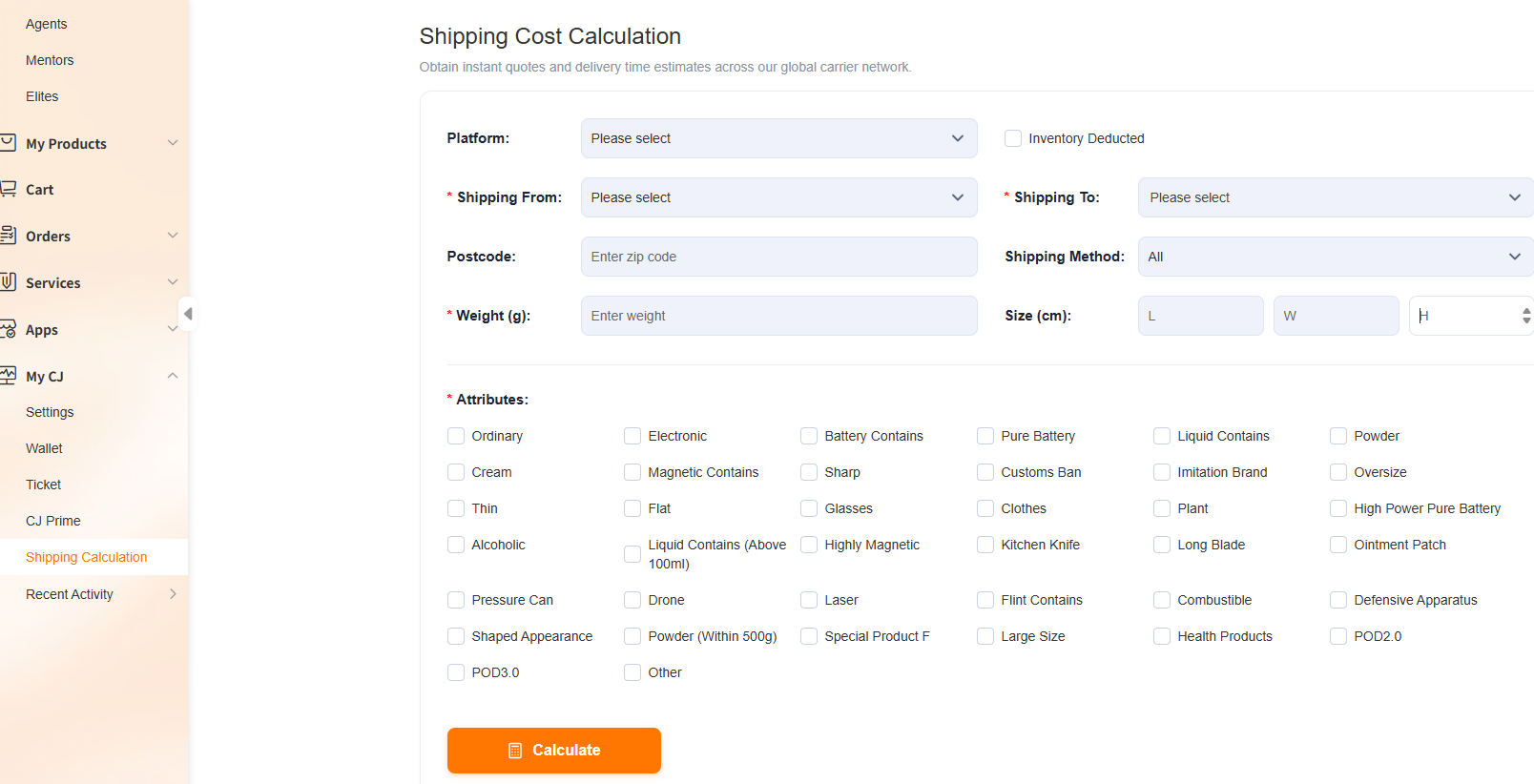
Sellers can use the CJ shipping calculator to explore available estimates, then confirm the applicable service and cost for their specific product and destination.
Step 5: Answer Questions Customers Ask Before Buying
Your customer service inbox can reveal gaps in your product content.
Look for repeated questions such as:
- “Will this fit my device?”
- “What is the size in inches?”
- “Can I wash this product?”
- “Does it include a charger?”
- “When will it arrive?”
- “What happens if it arrives damaged?”
Add useful answers to the relevant product page or FAQ. Keep the wording clear and verify the information with the product or supplier.
This can make the page more useful to shoppers regardless of whether they arrive from Google, social media, a marketplace, or an AI shopping assistant.
Step 6: Review Product Feeds and Sales Channels
If you use a product feed or sales channel integration, check:
- Whether products are eligible for that channel.
- Whether titles and descriptions are complete.
- Whether the correct images are included.
- Whether prices match the store.
- Whether inventory updates are working.
- Whether discontinued products remain visible.
- Whether required shipping and policy information is present.
Each platform has its own requirements. Review the official documentation for the channel you are using rather than assuming one setup works everywhere.
Step 7: Measure AI-Referred Traffic Where Possible
If AI product discovery becomes a meaningful source of visitors, you will want to understand what those visitors do.
Depending on your analytics setup, you may be able to review:
- Sessions from recognizable AI referral sources.
- Product pages those visitors view.
- Add-to-cart activity.
- Purchases and order value.
- Returning visits.
- Conversion compared with other channels.
Keep the limitations in mind. Not every AI-assisted visit can be identified reliably. Some shoppers may discover a product through AI, search for the brand later, and appear in analytics as organic or direct traffic.
Use the available data as one part of the picture, not as a complete count of every customer who used AI during their research.
Does AI Shopping Replace SEO and Social Media?
No. AI shopping adds another way for people to discover and compare products, while traditional search, social media, marketplaces, and brand websites continue to play important roles.
A customer journey can move across several channels:
- A person sees a product demonstration on TikTok.
- They ask an AI assistant to compare similar products.
- They search for reviews.
- They visit a brand’s website.
- They return later through an email or saved link.
This is why sellers should avoid treating channels as completely separate.
A helpful product page can support a shopper who arrives from many sources. A clear return policy can reduce uncertainty after a customer has researched alternatives. Accurate stock information can prevent disappointment whether a product was found on Google or through an AI shopping assistant.
For CJ sellers who want to improve their broader operations, our guide to automating dropshipping explains how store connections, inventory, orders, and fulfillment can work together.
A Practical Example: How an AI-Assisted Shopper Might Find a Product
Imagine a shopper with a long-haired dog. They want a grooming brush that is easy to clean, comfortable to hold, and priced below $30.
Their journey might look like this:
- They ask an AI shopping assistant for grooming brush options.
- They compare several brush styles.
- They ask a follow-up question about cleaning and handle design.
- They visit one or more merchant websites.
- They check product dimensions, materials, shipping, and reviews.
- They decide whether to buy.
This is a hypothetical example. An AI platform will not always show the same products or follow the same steps.
Now consider what the seller can control.
A useful product page could explain:
- Brush dimensions.
- Materials.
- Handle design.
- How the brush is cleaned.
- What is included.
- Verified guidance about suitable use.
- Shipping and returns.
The seller can also order a sample, confirm product details with the supplier, and make sure the chosen variant is available.
Those actions do not guarantee a recommendation. They improve the quality and reliability of the information available to customers.
How CJdropshipping Supports Sellers in a Changing Shopping Journey
AI shopping may change where customers discover products, but sellers still need to source products and deliver orders.
CJdropshipping can support parts of that process.
Product Sourcing
Sellers can explore products on CJ or submit a sourcing request for a product they want to find.
When evaluating an item, confirm its specifications, available variants, pricing, and suitability for the markets you serve.
Store Connection and Product Management
For supported platforms, sellers can connect a store and manage product connections. Correct variant mapping matters because the product presented to a shopper needs to match the product selected for fulfillment.
Available features depend on the sales channel and account settings.
Inventory, Shipping, and Fulfillment
Sellers can review available inventory and fulfillment options, compare shipping methods, and track orders through the applicable workflow.
For products with more predictable demand, some sellers may also evaluate whether pre-purchased inventory is appropriate. Costs, warehouse availability, and terms vary.
CJ MCP for Supported AI Workflows
CJ’s MCP integration documentation describes supported ways for compatible AI assistants to interact with CJ capabilities, including product and order-related information.
This is a tool for supported seller workflows. Connecting CJ MCP does not automatically place a merchant’s products in ChatGPT Shopping or guarantee product recommendations.
If you are preparing a store for new discovery channels, create a CJdropshipping account to explore sourcing and fulfillment options.
What Should Sellers Do Next?
AI shopping is changing how some consumers express their needs, compare options, and find products. For sellers, the best starting point is to improve the information and experience customers already depend on.
Choose five important product pages. Check the specifications, images, variants, price, stock, shipping, and return information. Then review the questions customers ask before buying and add clear answers where they are missing.
At the same time, continue investing in the channels that work for your business. Traditional search, social media, marketplaces, and AI shopping can all contribute to the same customer journey.
A product that is easy to understand and reliably fulfilled gives customers a stronger reason to trust the store, wherever they first discover it.
Frequently Asked Questions
1. What is AI shopping?
AI shopping is the use of AI-powered tools to help consumers discover, research, compare, or sometimes purchase products. The available features vary by platform, location, merchant, and product category.
2. How do consumers discover products through AI?
Consumers can describe their needs in natural language, ask for product options, and refine their choices with follow-up questions. Depending on the platform, they may see product information, images, comparisons, and links to merchant websites.
3. Can my products appear in ChatGPT Shopping?
Products may be discovered through the public web, third-party information, or supported merchant data integrations. Sellers can review OpenAI’s current merchant and product feed documentation to understand participation options. No method guarantees that a product will be displayed or recommended.
4. Does AI shopping replace Google SEO?
No. Traditional search remains an important discovery channel, and shoppers may use search engines alongside AI assistants, social media, and marketplaces. Sellers should monitor how customers find their store and maintain useful, accurate product content across channels.
5. How can dropshipping sellers prepare for AI shopping?
Start by reviewing product titles, specifications, images, prices, inventory, shipping details, and return policies. Confirm unclear information with suppliers, check product connections, and make sure the fulfillment process can support the customer experience shown on your store.